
Nestle Toll House Cookie Recipe

Table of Contents
Warm Oven Nostalgia
Nothing beats the smell of chocolate chip cookies baking—but getting that “just right” texture (golden edges, chewy center, glossy chips) takes a few smart moves. When you want a dependable crowd-pleaser for school events, cozy weekends, or a last-minute dessert, the Nestle Toll House Cookie Recipe is the classic to reach for. With a handful of small tweaks—measuring carefully, watching butter temperature, and pulling them at the perfect moment—you’ll bake cookies that taste like the best memories. Let’s grab your pantry staples and get started
Ingredients
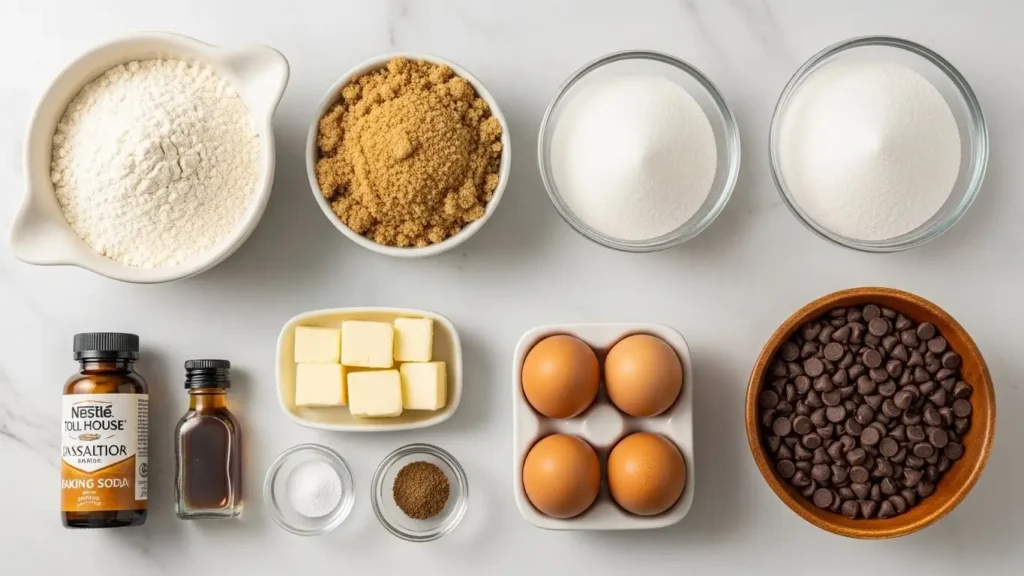
- 2 1/4 cups (270 g) all-purpose flour
- 1 teaspoon baking soda
- 1 teaspoon fine salt
- 1 cup (2 sticks / 226 g) unsalted butter, softened (cool room temp)
- 3/4 cup (150 g) granulated sugar
- 3/4 cup (165 g) packed light brown sugar
- 1 teaspoon vanilla extract
- 2 large eggs, room temperature
- 2 cups (about 12 oz / 340 g) semi-sweet chocolate chips
- 1 cup (120 g) chopped nuts (optional; walnuts or pecans)
- Optional add-ins (choose one):
- 1–2 teaspoons espresso powder (optional; deepens chocolate flavor)
- Flaky sea salt for finishing (optional; adds contrast)
Timing
- Prep Time: 15 minutes
- Bake Time: 9–11 minutes per batch
- Total Time: 25–55 minutes (includes optional 30-minute chill)
Most of the time is hands-on mixing and scooping; chilling is “wait time” that improves thickness and flavor.
Step-by-Step Instructions
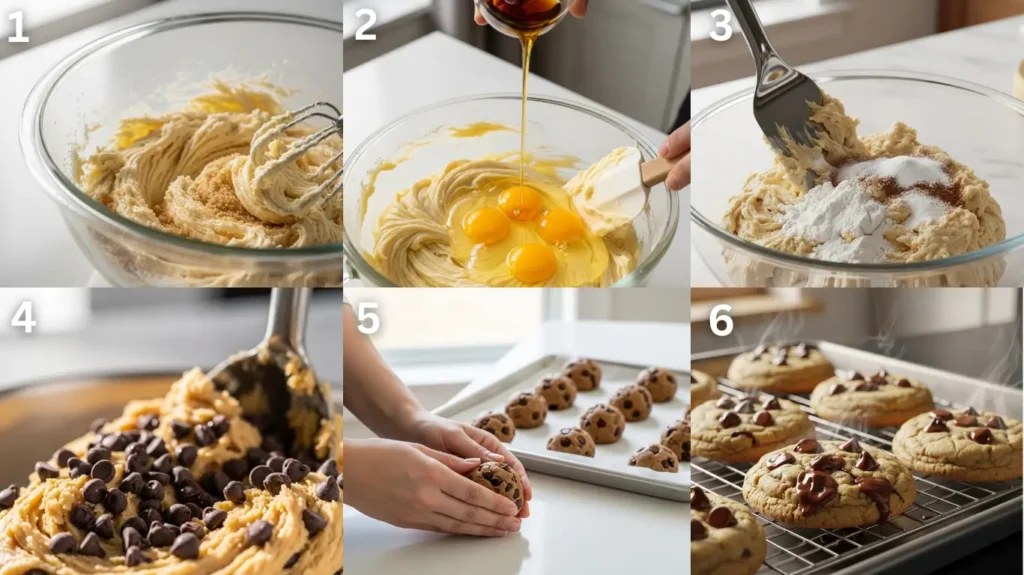
Step 1: Prep your pans and oven
Heat your oven to 375°F (190°C) and line baking sheets with parchment paper. This prevents over-browning on the bottoms and makes cleanup easy.
Tip 1: If your kitchen runs warm, pop the lined pans in the fridge while you mix—cool pans help reduce spreading.
Step 2: Mix the dry ingredients
Whisk flour, baking soda, and salt in a bowl until evenly combined. This quick whisk keeps the leavener from clumping and helps you avoid random salty bites.
Tip 2: Measure flour lightly; too much flour is the fastest way to turn a beloved original cookie recipe into a dry one.
Step 3: Cream butter and sugars properly
In a large bowl, beat softened butter with both sugars for 2–3 minutes, until lighter and fluffy. You’re building structure and that signature cookie texture here—don’t rush it.
Tip 3: Butter should be soft but not greasy; if it looks shiny or melty, chill it 10 minutes before continuing to prevent thin cookies.
Step 4: Add eggs and vanilla (don’t overdo it)
Beat in vanilla, then add eggs one at a time just until combined. Scrape the bowl so everything mixes evenly.
A common issue with the Nestle Toll House Cookie Recipe is overmixing after the eggs, which can lead to cakier cookies—mix only until you stop seeing streaks.
Step 5: Combine wet and dry, then fold in chips
Add the dry mix to the butter mixture and stir on low just until you see a few floury spots, then finish by hand. Fold in chocolate chips (and nuts if using) until evenly distributed.
Tip 4: Stop mixing the moment the dough comes together; extra stirring develops gluten and makes cookies tougher.
Step 6: Scoop, chill (optional), and bake
Scoop rounded tablespoons (about 1 1/2 Tbsp each) onto the sheet, leaving 2 inches between cookies. For thicker, chewier results, chill the scooped dough 30 minutes.
Bake 9–11 minutes, until edges are light golden and centers look slightly underdone (they’ll finish setting on the pan).
Tip 5: Pull them early—overbaking is the #1 reason the original cookie recipe loses that chewy middle.
Step 7: Cool for the perfect set
Let cookies cool on the baking sheet for 2 minutes, then move to a rack. That short rest firms them up without drying them out.
If you love a bakery finish, add a tiny pinch of flaky salt while they’re still warm.
Variations & Substitutions
- Extra-chewy version: Chill the dough 1–24 hours before baking. The flavor deepens and the cookies spread less, giving you a thicker center (especially helpful if your butter was very soft).
- Crispier edges: Bake 1–2 minutes longer and use slightly smaller scoops. You’ll get more caramelized edges while still keeping some tenderness in the middle.
- Chocolate swap: Use a mix of semi-sweet and dark chocolate chunks for puddly pockets. Chunks melt more irregularly, so the texture feels more “bakery-style.”
- Flour swap (gluten-free): A 1:1 gluten-free baking blend can work well; expect a slightly softer, more delicate cookie. Chill the dough to help it hold shape.
Serving Suggestions
- Serve warm with a cold glass of milk for the classic cozy-evening vibe.
- Make ice cream sandwiches for family gatherings—vanilla or coffee ice cream pairs beautifully.
- Add to a brunch spread with fruit and yogurt; cookies at “quiet weekend mornings” hit different.
- Crumble over vanilla pudding or whipped cream for an easy last-minute dessert.
- Pack a couple for lunchboxes or road trips—they travel well once fully cooled.
Common Mistakes to Avoid
- Packing the flour into the cup: This makes dough dry and cookies thick in a bad way. Spoon and level, or weigh it for consistent results.
- Using butter that’s too warm: If it’s glossy or partially melted, cookies spread fast and bake up thin. For the Nestle Toll House Cookie Recipe, aim for soft-but-cool butter.
- Overbaking: If you wait until the centers look fully done in the oven, they’ll be crunchy once cooled. Pull when the edges are golden and the centers still look a little soft.
- Overmixing after adding flour: Too much mixing = tougher cookies. Stir just until combined.
- Crowding the pan: Cookies need space to spread and bake evenly; bake in batches if needed.
Storage & Reheating
- Room temperature: Store cooled cookies in an airtight container for 3–5 days. Add a slice of bread to the container if you want them extra soft.
- Refrigerator: Not necessary, but they’ll keep up to 1 week airtight (texture may firm up).
- Freezer: Freeze baked cookies up to 2 months. You can also freeze scooped dough balls up to 3 months—bake from frozen, adding 1–2 minutes.
- Best reheat: Microwave 6–10 seconds for a warm, gooey center, or heat in a 300°F (150°C) oven for 3–4 minutes to revive edges without drying them out.
Frequently Asked Questions
Why did my cookies spread too much?
Usually it’s butter that was too warm, a hot baking sheet, or not enough flour. Chill the dough 30 minutes and make sure your oven is fully preheated.
Can I chill the dough overnight?
Yes—and it’s one of the easiest upgrades. Overnight chilling deepens flavor and helps the cookies bake thicker and chewier.
Can I freeze this dough?
Absolutely. Scoop into portions, freeze on a tray, then store in a freezer bag. Bake straight from frozen with an extra minute or two.
How do I make them chewier instead of cakey?
Use proper flour measuring, don’t overmix after adding flour, and pull them when the centers still look slightly underdone. These three tweaks keep the original cookie recipe in that chewy lane.
What if I don’t have brown sugar?
Brown sugar adds moisture and chew. You can still bake a tasty batch by adjusting with what you have, but the texture will be less chewy and more crisp-tender—plan to chill the dough for better thickness.
Conclusion
Once you’ve baked a couple of rounds, you’ll notice how small choices—cooler butter, properly measured flour, and the right pull-time—transform the Nestle Toll House Cookie Recipe from “good” to bakery-level comforting. I’ve found that sticking to the basics, then chilling when you can, gives the most consistent chewy centers and golden edges. Save this for your next cookie craving, and if you want to compare notes with the official classic, check this trusted source.
How did you like the recipe?
There are no reviews yet. Be the first one to write one.