
Delicious Chocolate Chess Pie Recipe
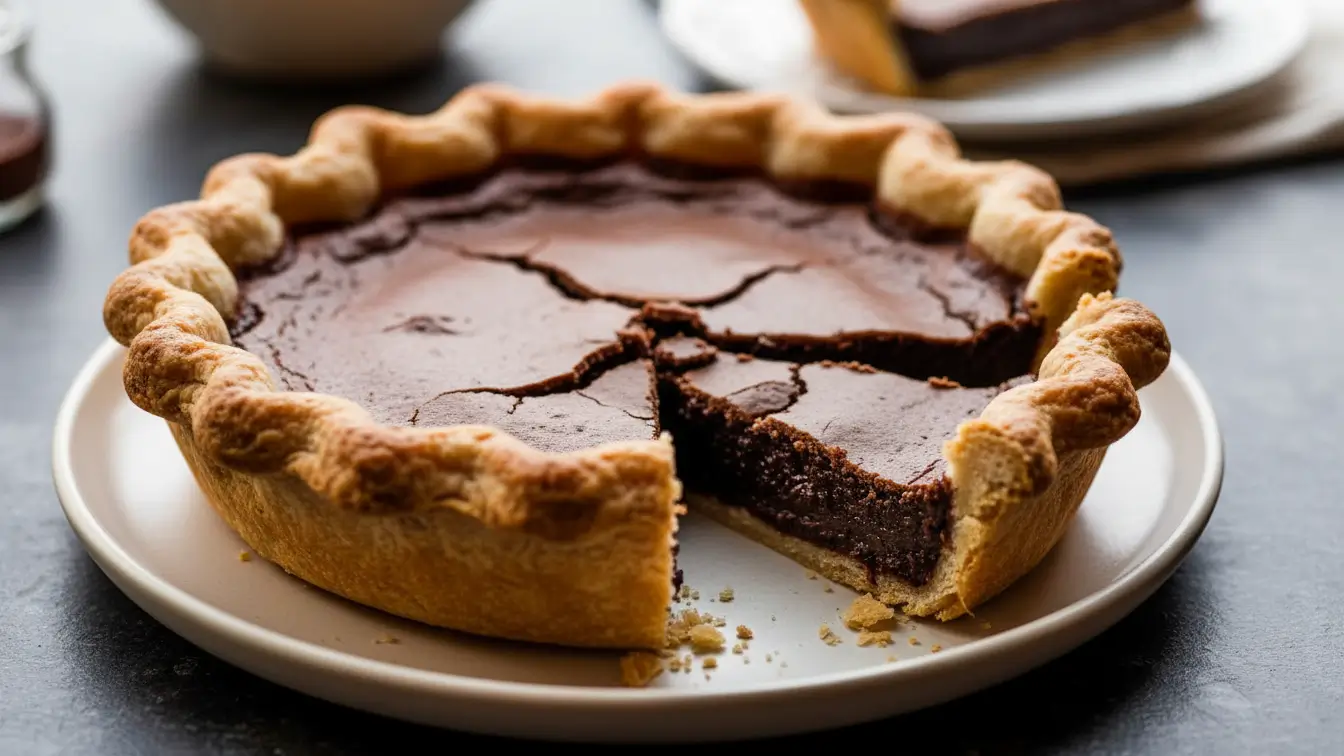
Table of Contents
A Southern Classic
There’s something deeply comforting about a slice of rich, glossy pie cooling on the counter—especially when the kitchen smells like cocoa and warm butter. This chocolate chess pie is the kind of dessert you make when you want “easy but impressive,” whether it’s a Sunday supper, a potluck, or a cozy night in. You get a crackly top, a fudgy center, and that nostalgic, sweet-salty bite. It’s also a wonderful make-ahead treat, so your homemade chocolate chess pie can be ready before guests arrive. Let’s grab the ingredients.
Ingredients
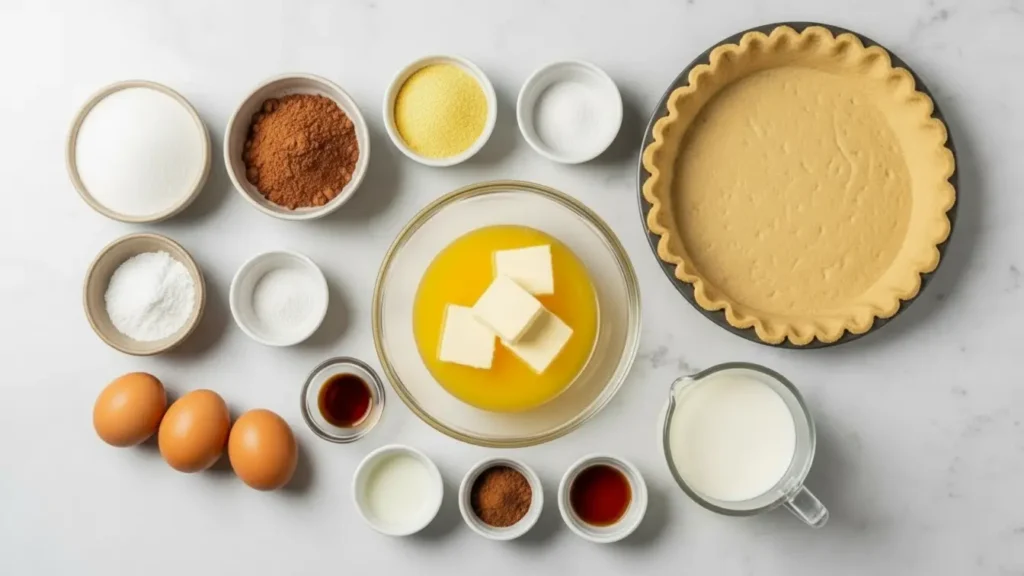
- 1 (9-inch) unbaked pie crust (store-bought or homemade)
- 1 1/2 cups (300 g) granulated sugar
- 3 tbsp (24 g) unsweetened cocoa powder
- 1 tbsp (8 g) cornmeal
- 1/4 tsp fine salt
- 1/2 cup (113 g) unsalted butter, melted and slightly cooled
- 3 large eggs, room temperature
- 1/2 cup (120 ml) evaporated milk
- Note: Whole milk works, but evaporated milk gives a silkier set.
- 1 1/2 tsp vanilla extract
Optional (but great):
- 1 tsp espresso powder (deepens the chocolate flavor without tasting “coffee”)
- 1 tbsp (15 ml) distilled white vinegar (traditional in some chess pies; brightens sweetness)
Timing
- Prep Time: 10–15 minutes
- Bake Time: 45–55 minutes
- Total Time: 1 hour to 1 hour 10 minutes, plus cooling
Most of the time is hands-off while it bakes and then sets; plan on at least 2 hours of cooling for neat slices.
Step-by-Step Instructions
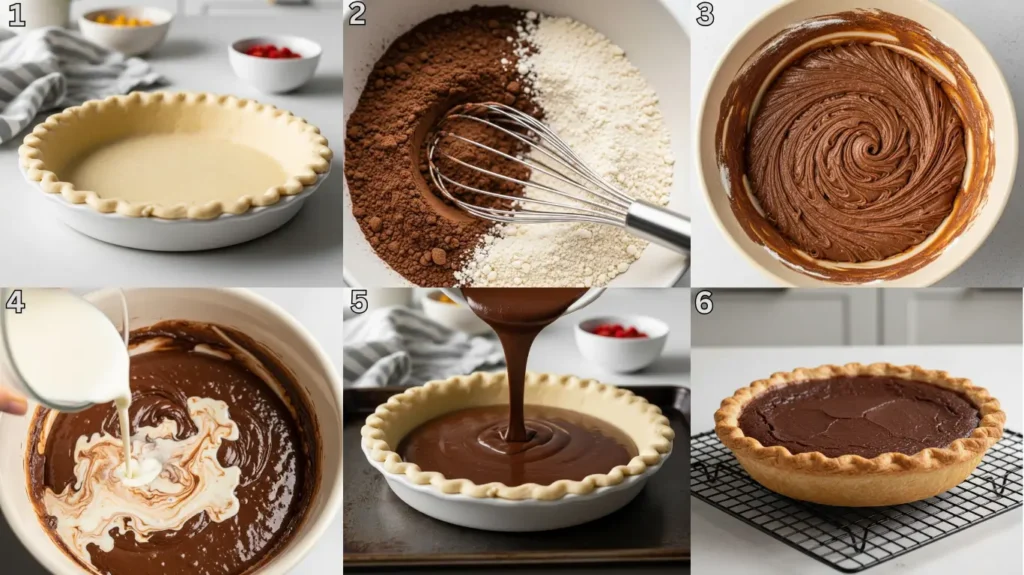
Step 1: Preheat and prep the crust
Heat your oven to 350°F (175°C). Fit the pie crust into a 9-inch pie plate, crimp the edges, and chill it while you mix the filling. A cold crust helps prevent slumping and keeps the edge prettier.
Step 2: Mix the dry ingredients
In a large bowl, whisk together the sugar, cocoa powder, cornmeal, and salt. Take an extra 10 seconds to break up cocoa lumps—those can turn into bitter little pockets after baking.
Step 3: Add butter, then eggs
Whisk in the melted butter until the mixture looks like dark, wet sand. Add the eggs one at a time, whisking well after each. This gradual mixing helps the filling bake up smooth rather than grainy.
Step 4: Stir in milk and vanilla
Pour in the evaporated milk and vanilla (plus espresso powder and/or vinegar if using) and whisk until fully combined. You’re looking for a glossy, pourable batter with no streaks.
Step 5: Fill and bake
Pour the filling into the chilled crust and place the pie on a rimmed baking sheet (insurance against drips). Bake 45–55 minutes, until the edges are set and the center still has a slight jiggle—think “soft set,” not liquid. The top will form a delicate, crackly layer as it cools; that’s a signature of a well-baked chocolate chess pie.
Step 6: Cool completely before slicing
Let the pie cool on a rack for at least 2 hours. If you slice too soon, the center can look loose even if it’s fully baked. For the cleanest slices, chill for 30–60 minutes right before serving.
Variations & Substitutions
- Dark chocolate version: Swap in Dutch-process cocoa for a deeper, smoother chocolate taste. The pie will look darker and taste slightly less sharp than with natural cocoa.
- Bourbon vanilla twist: Add 1–2 tsp bourbon along with the vanilla. It gives a warm caramel note without overpowering the chocolate.
- Dairy swap: Use whole milk instead of evaporated milk in a pinch. The filling will still set, but it may be a touch less creamy.
- Gluten-free option: Use a gluten-free pie crust and confirm your cornmeal is certified GF if needed. The filling itself is naturally gluten-free, making this chocolate chess pie an easy adaptation.
Serving Suggestions
- Serve slightly chilled with a big spoonful of fresh whipped cream for a classic diner-style bite.
- Add a scoop of vanilla ice cream—melting into the fudgy center is hard to beat on cozy evenings.
- Dust lightly with powdered sugar for a simple, pretty finish at family gatherings.
- Pair with strong coffee for quiet mornings when you want a small slice as a treat.
- Top with fresh berries (raspberries are especially good) to cut the sweetness and add a bright pop.
Common Mistakes to Avoid
- Overbaking the center: If the middle is baked until completely firm in the oven, it can turn dry after cooling. Pull it when the edges are set and the center still trembles slightly.
- Slicing while warm: This pie needs time to set. Cooling is what transforms the filling into that fudgy, sliceable texture.
- Not whisking the cocoa well: Cocoa clumps don’t always dissolve during baking. Whisk the dry mix thoroughly before adding wet ingredients.
- Skipping the baking sheet: A little leak from the crust edge can smoke and burn on the oven floor. The sheet keeps cleanup easy and stress low.
- Using hot butter: Let melted butter cool a few minutes. If it’s piping hot, it can partially cook the eggs and create tiny lumps.
Storage & Reheating
- Room temperature: Store covered for up to 1 day if your kitchen is cool.
- Refrigerator: Cover tightly and refrigerate for up to 4–5 days. The texture becomes even denser and more fudge-like.
- Freezer: Wrap slices (or the whole pie) in plastic wrap and then foil; freeze up to 2 months. Thaw overnight in the fridge.
- Reheating: For a warm slice, microwave in 10–15 second bursts. If you want to keep the crust crisper, warm slices in a 300°F (150°C) oven for about 8–10 minutes.
Frequently Asked Questions
Why is my pie runny in the middle?
It likely needed a bit more bake time or more cooling time. The center should jiggle slightly when you nudge the pan, but it shouldn’t ripple like liquid. Cooling fully is essential for the set.
Can I make this ahead of time?
Yes—this is a great make-ahead dessert. Make it the day before, chill, and you’ll get cleaner slices. A homemade chocolate chess pie is often even better on day two.
Do I need to par-bake the crust?
Not usually. With this filling and bake time, an unbaked crust works well. If you know your oven bakes pale bottoms, you can set the pie plate on a preheated baking sheet to encourage browning.
What’s the difference between chess pie and brownie pie?
They’re cousins, but not identical. Chess pie typically has a signature crackly top and a custard-like set from eggs (often with cornmeal), while brownie pie leans more cake-fudgy and flour-based. Chocolate chess pie lands in that custardy-fudge sweet spot.
Can I use a deep-dish crust?
You can, but you may have extra space. Don’t overfill—leave about 1/4 inch at the top to prevent spillover. Any extra filling can be baked in a greased ramekin as a little bonus pudding.
Conclusion
If you love a dessert that feels nostalgic but takes minimal effort, this one belongs in your regular rotation. After testing and tweaking, the key is simple: whisk well, don’t overbake, and let it cool until the filling turns perfectly fudgy. Save this homemade chocolate chess pie for holidays, potlucks, or those weeknights when you just want something deeply chocolatey. And if you’re curious about the history behind chess pies, this trusted source is a great read.
How did you like the recipe?
There are no reviews yet. Be the first one to write one.