
The Ultimate Vanilla Cake Recipe: Soft, and Delicious
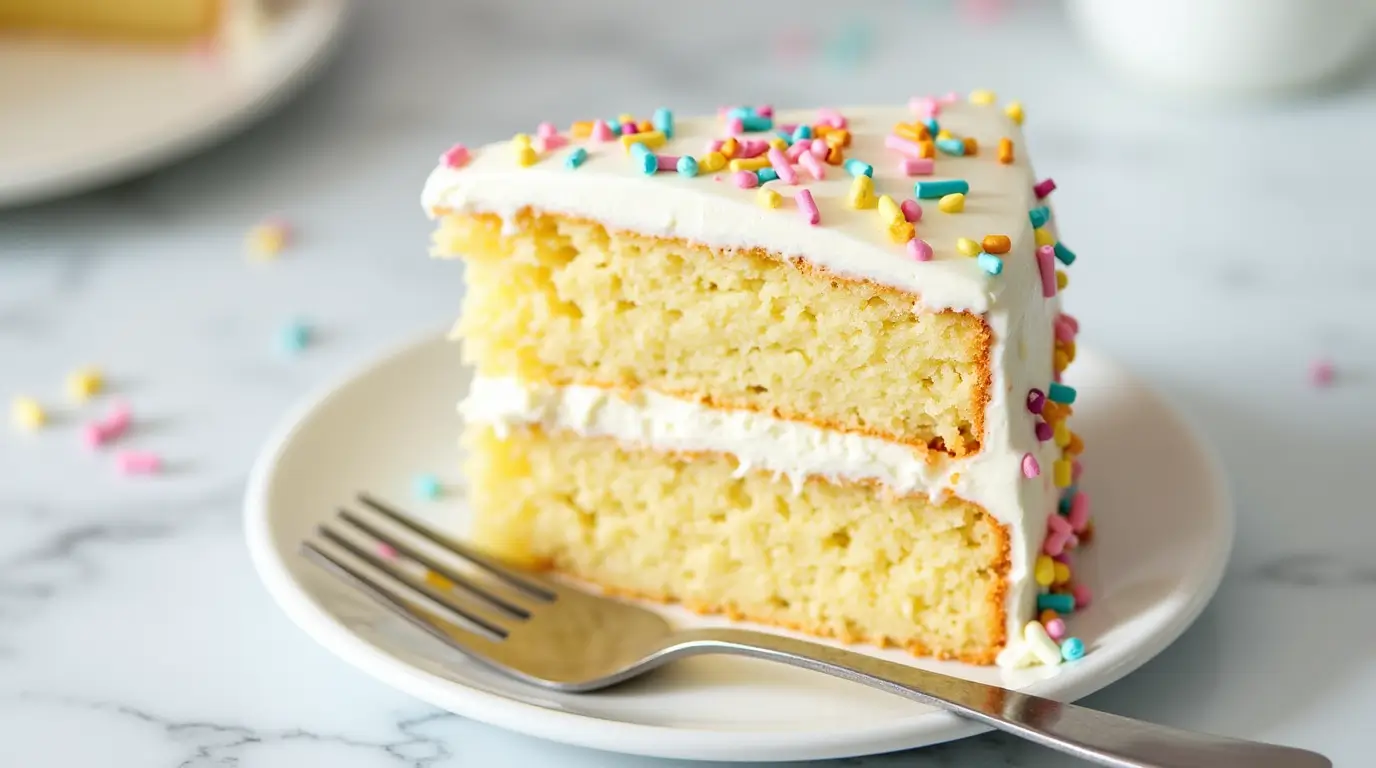
Table of Contents
A Classic Worth Baking
There’s something deeply comforting about the smell of butter and vanilla drifting through your kitchen—warm, sweet, and instantly nostalgic. This recipe is the kind you make for birthdays, weekend cravings, or when you want a simple dessert that feels special without a fuss. If you’ve been searching for a reliable vanilla cake that bakes up soft and fluffy with a tender crumb, you’re in the right place. I’d even call it a contender for the best vanilla cake when you want pure, timeless flavor. Let’s gather your ingredients and get started.
Ingredients
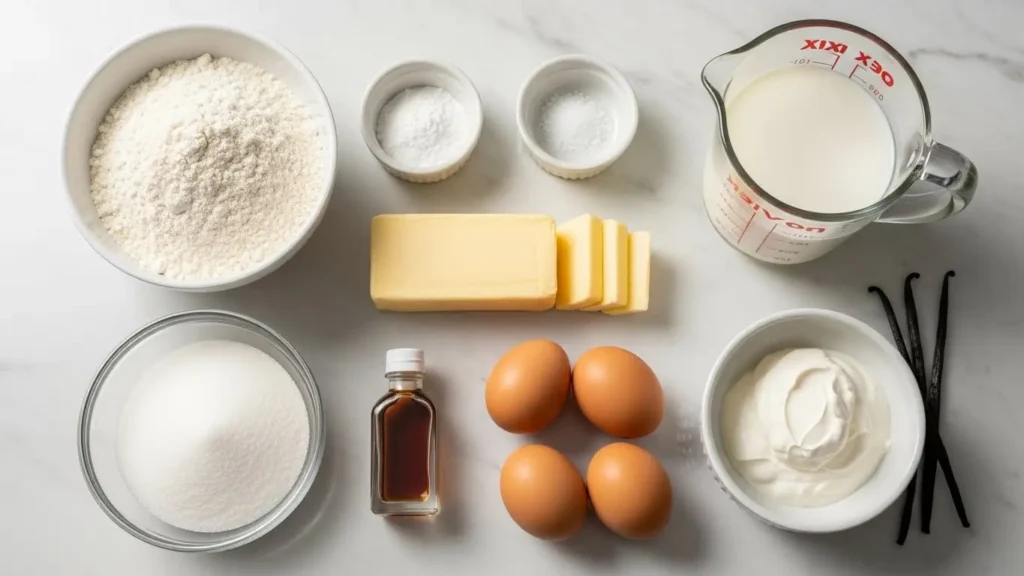
- 2 1/2 cups (300 g) all-purpose flour
- 2 1/2 tsp baking powder
- 1/2 tsp fine salt
- 3/4 cup (170 g) unsalted butter, softened to room temperature
- 1 1/2 cups (300 g) granulated sugar
- 4 large eggs, room temperature
- 1 tbsp vanilla extract
- 1 cup (240 ml) whole milk, room temperature
- 1/4 cup (60 g) sour cream, room temperature (adds tenderness)
Optional (for extra vanilla depth):
- 1/2 tsp vanilla bean paste or the seeds from 1/2 vanilla bean
Optional (for serving):
- Powdered sugar, fresh berries, whipped cream, or your favorite frosting
Timing
- Prep Time: 20 minutes
- Bake Time: 28–35 minutes
- Total Time: 55–70 minutes (including cooling)
Most of the time is hands-on mixing and then waiting for the cake to bake and cool—cooling matters for clean slices and neat frosting.
Step-by-Step Instructions
Step 1: Prep your pans and oven
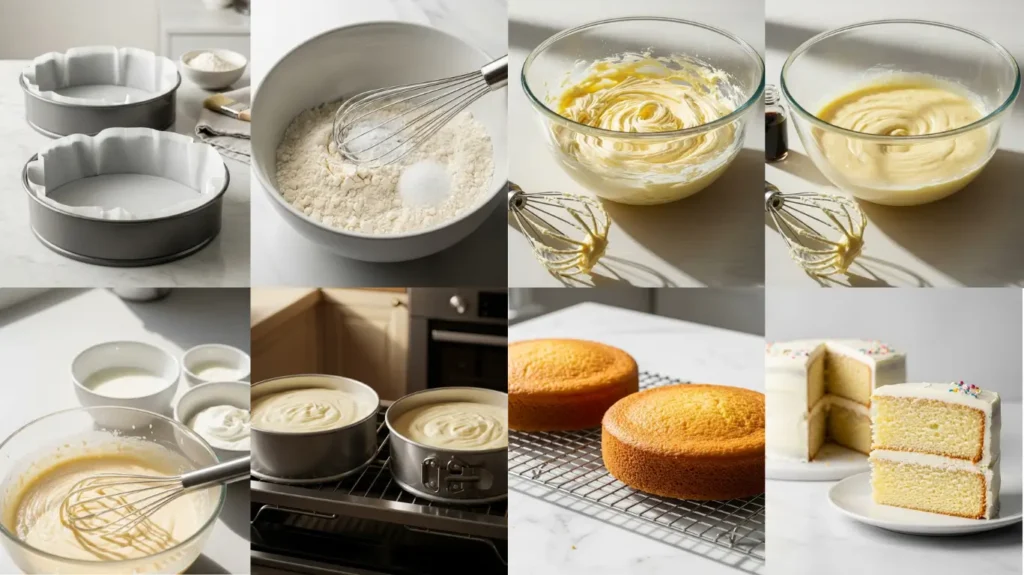
Heat your oven to 350°F (175°C). Grease two 8-inch round pans and line the bottoms with parchment; this small step saves you from sticking drama later. Lightly flour the sides, tapping out the excess.
Step 2: Mix the dry ingredients
In a medium bowl, whisk together the flour, baking powder, and salt. Whisking evenly distributes the leavening so you don’t get random tunnels or bitter baking powder pockets in the finished cake.
Step 3: Cream butter and sugar properly
In a large bowl, beat the butter and sugar for 3–4 minutes until pale and fluffy. This isn’t just “mixing”—you’re building air for a lighter crumb, so don’t rush it. Scrape down the bowl halfway through so everything creams evenly.
Step 4: Add eggs and vanilla (slowly)
Beat in the eggs one at a time, mixing well after each addition. If the mixture looks slightly curdled, don’t panic—once the dry ingredients go in, it smooths out. Mix in the vanilla extract (and vanilla bean paste, if using).
Step 5: Alternate wet and dry for tender batter
On low speed, add the dry mixture in three additions, alternating with the milk and sour cream (start and end with dry). Mix just until you no longer see streaks of flour—overmixing is the fastest way to a tougher texture. The batter should look creamy and thick but spreadable.
Step 6: Bake and check for doneness
Divide the batter evenly between the pans and smooth the tops. Bake for 28–35 minutes, rotating once if your oven has hot spots. When a toothpick comes out clean (or with a few moist crumbs), the layers are done—avoid overbaking, which can dry out an otherwise perfect vanilla cake.
Step 7: Cool before slicing or frosting
Let the cakes cool in the pans for 10 minutes, then turn out onto a rack to cool completely. If you frost while warm, the frosting will melt and slide. For the cleanest layers, chill the cakes for 20–30 minutes before leveling or decorating.
Step 8: Assemble and frost the cake
Place one cooled cake layer on a serving plate and spread an even layer of frosting on top. Add the second layer and gently frost the top and sides. Keep the finish simple, or decorate lightly before serving.
🔸 Note: Making a multi-layer cake (optional)
If you’d like to make a taller cake with more layers, you can carefully slice each cake layer horizontally using a long serrated knife. Spread frosting between each sliced layer, then stack and frost as usual. This step is optional and works best once the cake is fully cooled or lightly chilled.
Variations & Substitutions
- Make it a sheet cake: Bake in a greased 9×13-inch pan for about 30–38 minutes. The texture stays soft, and it’s easier for casual gatherings (no layering required).
- Add citrus brightness: Stir in 1 tbsp lemon zest with the sugar. It lifts the flavor and makes the vanilla taste even more vibrant without turning it into a lemon cake.
- Swap sour cream: Use plain full-fat Greek yogurt in the same amount. You’ll still get a moist, tender crumb with a lightly tangy balance.
- Dairy-free adjustment: Use a plant-based butter and unsweetened oat milk plus 1 tsp apple cider vinegar (stir and rest 5 minutes). Expect a slightly different richness, but the cake still bakes up nicely.
Serving Suggestions
- Dust with powdered sugar and serve with berries for a simple, elegant slice.
- Frost with classic vanilla buttercream for birthdays and family gatherings—this is where it earns “best vanilla cake” energy.
- Serve with warm coffee or tea for quiet mornings when you want something comforting but not heavy.
- Add a scoop of vanilla or strawberry ice cream for cozy evenings and dessert nights.
- Layer with whipped cream and fruit for a light, shortcake-style finish.
Common Mistakes to Avoid
- Using cold ingredients: Cold eggs and milk can make the batter seize and bake unevenly. Room temperature ingredients blend smoothly and rise better.
- Under-creaming the butter and sugar: If you stop too soon, the cake can turn dense. Aim for visibly paler, fluffier mixture.
- Overmixing after adding flour: Once flour is in, mix gently and briefly. Overmixing can lead to a chewy texture.
- Overbaking “just to be safe”: A few extra minutes can dry the layers out. Start checking early and pull the cakes when crumbs are moist, not wet.
- Frosting too soon: Warm cake melts frosting and can tear the surface. Cool completely for clean results.
Storage & Reheating
- Room temperature: Store covered for up to 2 days. Keep it well sealed so it stays soft.
- Refrigerator: Store up to 5 days in an airtight container. Let slices sit at room temp for 20–30 minutes before eating for the best texture.
- Freezer: Wrap unfrosted layers (or individual slices) tightly in plastic wrap, then foil, and freeze up to 2 months. Thaw overnight in the fridge or for a few hours at room temperature.
- Reheating: For a just-baked feel, warm a slice for 10–15 seconds in the microwave. This brings back that tender, buttery crumb—especially nice with a scoop of ice cream.
Frequently Asked Questions
Why did my cake sink in the middle?
Usually it’s underbaking, opening the oven door too early, or overmixing the batter (which can weaken structure). Bake until a toothpick comes out clean and avoid checking before the 25-minute mark.
Can I make this vanilla cake as cupcakes?
Yes. Fill liners about 2/3 full and bake at 350°F (175°C) for 16–20 minutes. Start checking at 15 minutes; cupcakes overbake quickly.
What makes this taste like the best vanilla cake?
Good vanilla extract, proper creaming, and not overbaking. That combo gives you clean vanilla flavor and a soft, plush crumb instead of something dry or eggy.
Can I use cake flour instead of all-purpose?
You can: use 2 3/4 cups (330 g) cake flour in place of the all-purpose flour. The texture becomes finer and slightly more delicate.
How do I keep the layers from sticking to the pan?
Parchment on the bottom is the real secret. Also, let the cakes rest for 10 minutes in the pan before turning out—too soon and they can tear.
A Simple Favorite
Once you’ve baked this a time or two, you’ll feel how forgiving and dependable it is—soft layers, gentle vanilla aroma, and that classic homemade taste that disappears fast. Save it for birthdays, bake sales, or any day you want a treat that feels like a hug. If you’re aiming for the best vanilla cake in your regular rotation, this one is a keeper. For a quick read on the history and basics, here’s a trusted source.
How did you like the recipe?
There are no reviews yet. Be the first one to write one.